Serving Rochester, MN and surrounding areas. (507) 738-1155
Your gravel lot turns into a muddy mess every spring. A concrete parking lot built for Minnesota winters ends that cycle for good.
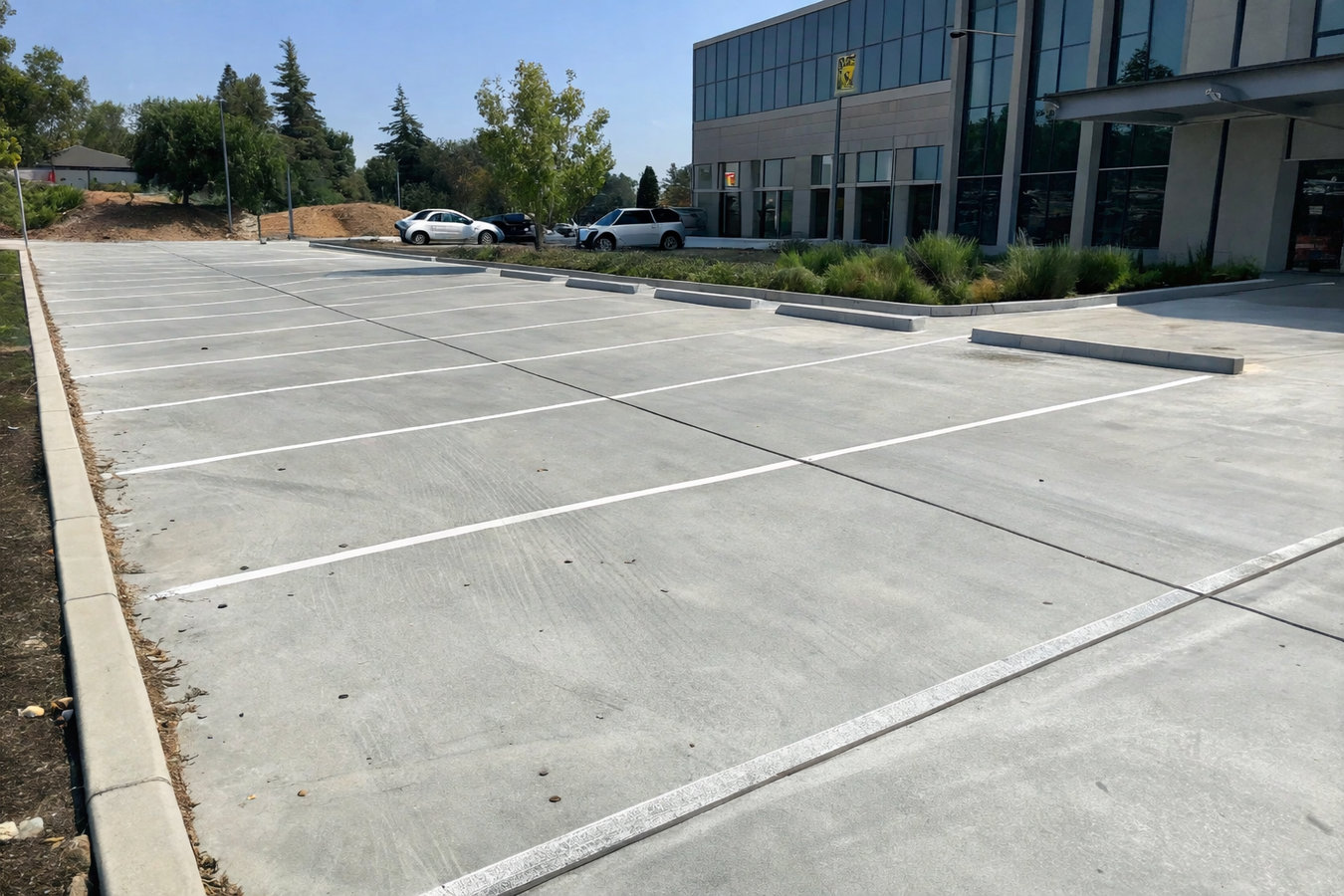
Concrete parking lot building in Rochester involves excavating to a frost-safe depth, compacting a gravel base, pouring and finishing the slab, and cutting control joints - most residential projects are poured in one to three days, with a five to seven day curing period before you can drive on the surface.
The biggest factors driving cost are lot size, slab thickness, base depth needed for Minnesota frost conditions, and whether any existing surface needs removal. Rochester winters demand a thicker, better-prepared slab than milder climates do - a five to six inch slab on a deep compacted base outlasts a thinner pour by decades. If you also need a solid surface for pedestrian access, our concrete sidewalk building team can coordinate that work at the same time.
Material and labor prices shift with the market - the best step is to get a written quote that specifies the slab thickness and base depth so you are comparing real scope, not just a number.
If vehicles are kicking up dust, getting stuck in mud after rain, or navigating a pitted surface, your property needs a solid paved solution. Rochester's wet springs and icy winters make an unpaved or failing surface a real problem every year.
If water collects where vehicles park, or if mud tracks into your garage or driveway, a properly graded concrete lot with built-in drainage solves both problems at once. Rochester's heavy spring snowmelt makes drainage a real seasonal headache for properties without a paved surface.
A growing household, a home-based business, or frequent guests can make a single-car driveway feel inadequate quickly. Building a dedicated concrete parking area gives everyone a defined, durable place to park without damaging your lawn.
A clean, well-built concrete parking area adds visible appeal and practical value. Buyers notice the difference between a muddy gravel patch and a solid, finished surface - and in Rochester's market, a durable surface signals a well-maintained property.
Every parking lot we build starts with excavation and base preparation designed for southeastern Minnesota frost depths. We compact the base in layers, set forms at the lot perimeter, pour the concrete to the correct thickness for your vehicle load, and cut control joints at proper intervals to manage how the slab relieves stress over time. Drainage slope is designed in from the start - standing water is the fastest way to shorten a concrete surface's life in a cold climate, and we do not leave it as an afterthought.
We also handle the city permit application, which is required for most new paving projects in Rochester and may include a stormwater or drainage review for larger lots. For properties that need foundation work or structural base work alongside the parking lot project, our concrete footings and concrete driveway building teams can coordinate on a single project.
Ideal for properties replacing gravel, dirt, or deteriorated asphalt with a long-lasting concrete surface.
Suits homeowners or businesses adding parking capacity alongside an existing driveway or structure.
Best for properties with low spots or water management challenges near the parking area.
For all new Rochester parking lot projects requiring city permits and stormwater review.
Rochester sits in southeastern Minnesota, where the ground freezes deep every winter and spring snowmelt can turn unpaved surfaces into mud for weeks. The freeze-thaw cycle is the single biggest force acting on any paved surface here - concrete expands and contracts with every temperature swing, and a slab poured on a shallow or poorly compacted base will crack, heave, or settle unevenly within a few seasons. A parking lot built for this climate needs a deeper base, closer control joint spacing, and a concrete mix rated for freeze-thaw resistance. That is how you get a surface that holds up year after year instead of needing patching every spring. Rochester also requires city permits for most new paving projects, and the permit process includes review of drainage and stormwater management - something that matters for any property with low spots or tight drainage.
We serve the full Rochester metro area, including Stewartville and Byron. Whether you are adding parking to a property that has outgrown a single driveway or replacing a failing gravel lot, we know the soil conditions, frost depths, and permitting requirements across this region.
Call or submit the form and we will visit your property within one business day to measure the area and assess soil and drainage conditions. You receive a written estimate that breaks down scope, slab thickness, and base depth.
We handle the city permit application on your behalf - a required step for most new Rochester parking lots. Once approved, we excavate and compact the base to the depth needed for Minnesota frost conditions.
We set forms along the lot edges, pour the concrete, and tool control joints at proper intervals. A typical residential parking lot pour is completed in a single day.
We keep vehicles off the surface for five to seven days minimum while the concrete cures. After curing, we walk the site with you to review the surface, edges, and drainage before closing the project.
No pressure, no surprises - just a clear written estimate with slab thickness and base depth specified so you know exactly what you are getting.
(507) 738-1155We excavate and compact base material to the depth required for southeastern Minnesota's frost line - not a depth chosen for convenience. That base is what keeps your parking lot level through decades of freeze-thaw cycles.
We apply for the required city permit as a standard step, not an afterthought. A permitted project means a city inspection confirms the work meets local requirements - which protects your investment if you ever sell the property.
We space and cut control joints to guide where the slab relieves stress, so cracking follows the joints rather than running randomly across the surface. Skipping or spacing joints too far apart is a common shortcut that shows up as cracks within a few winters.
Bedrock Rochester Concrete Works follows the standards of the American Society of Concrete Contractors. Those standards cover mix design, base preparation, and finishing practices that matter specifically in cold-climate markets like Rochester.
Rochester winters test every paved surface. The contractors who earn referrals here are the ones who design for the climate from the first shovel of excavation, not the ones who pour fast and hope the surface holds. We build parking lots that are still performing well a decade in because we do the base work right. Learn more about ASCC concrete contractor standards.
Underground concrete footings for additions, garages, decks, and other structures, dug below the Minnesota frost line.
Learn MoreNew concrete driveways for Rochester homes, poured to the thickness and base depth needed for freeze-thaw durability.
Learn MoreSpring and summer construction slots fill fast - reach out now to lock in your date before the season books up.