Serving Rochester, MN and surrounding areas. (507) 738-1155
Crumbling entry steps are a trip hazard and a first impression problem. New concrete steps built for Rochester winters fix both.
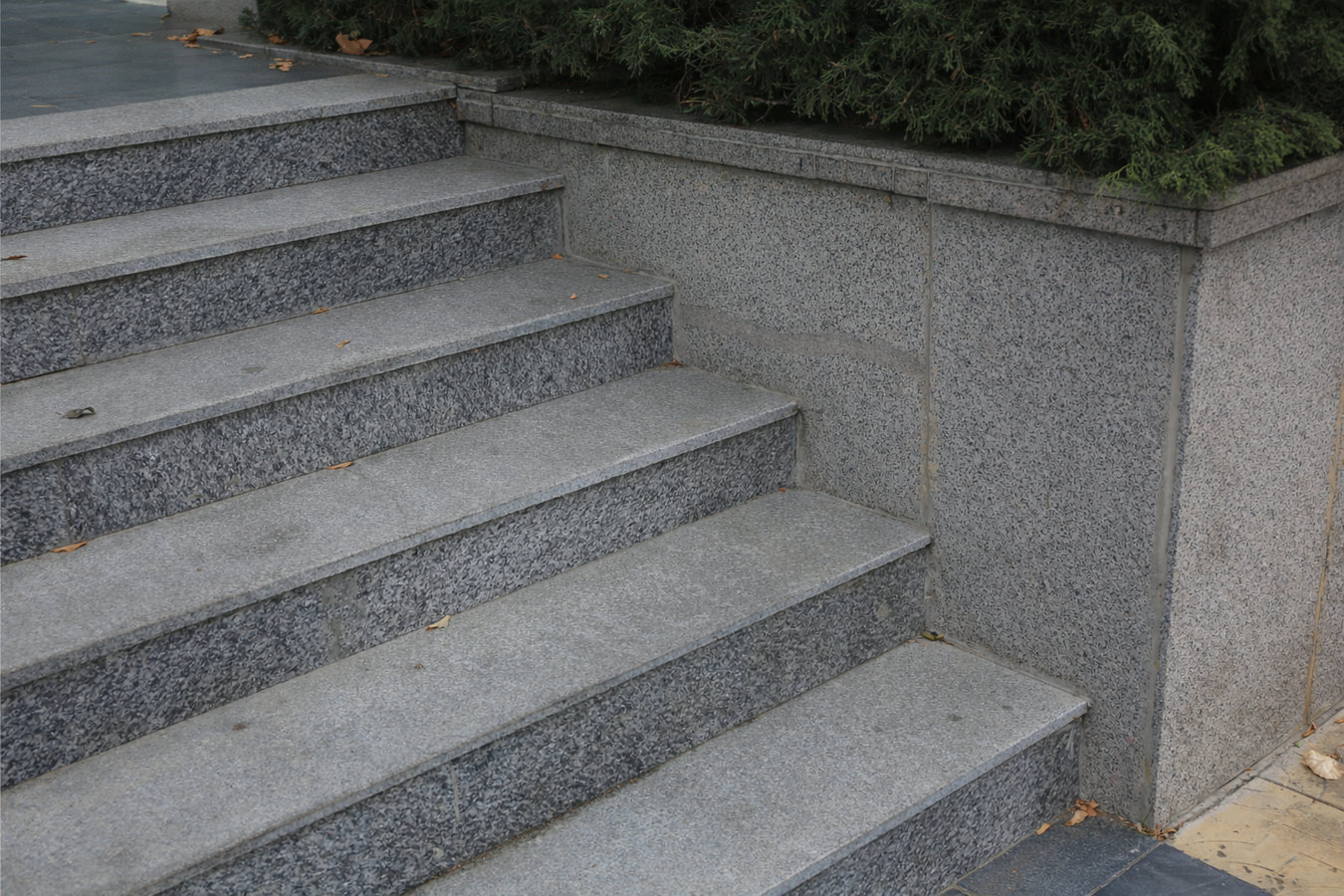
Concrete steps construction in Rochester means forming, pouring, and finishing a new set of entry steps with reinforcing steel and a base set below the Minnesota frost line - most residential jobs take one to two days of active work from demolition through pour.
Your front or side entry steps are a safety surface and a visual anchor for your home's exterior. In a city with Rochester's freeze-thaw winters, steps built on a shallow base or with the wrong concrete mix start shifting and cracking within a few seasons. The difference between steps that last 30 years and steps that need repair in five comes down to what happens under the surface before a drop of concrete is poured.
Many homeowners replace entry steps alongside concrete retaining walls when landscaping or grading work brings the whole front exterior up to the same standard at once.
If the top layer of your steps is peeling away in chips or flakes, years of freeze-thaw cycles and ice melt products have broken down the material. Once the surface layer is gone, water gets in faster and the deterioration accelerates every winter.
Small surface cracks can sometimes be patched, but cracks that run all the way through a step or along the joint where the steps meet the house are structural. In Rochester's climate, those cracks widen every winter as water freezes inside them - they will not improve on their own.
A gap between your steps and your foundation, or steps that no longer sit level, means the base beneath has moved - likely from frost heave. Tilted steps become a serious trip hazard when wet or icy, and the movement will continue each winter.
Steps that have settled at different rates create inconsistent stride heights that catch people off guard - especially in low light or when carrying anything. Uneven risers are a fall hazard for everyone who uses your entry and get more dangerous when snow-covered.
We build concrete steps from the ground up - demolishing old steps, excavating to below Rochester's frost depth, compacting a gravel base, placing rebar or wire mesh reinforcement, and pouring a freeze-thaw-rated concrete mix. Every set of steps is formed with consistent riser heights and a slight forward pitch so water runs away from the house rather than back toward the foundation. For larger exterior projects, slab foundation building can be coordinated at the same time to ensure the base work is done once and done correctly for all connected structures.
Finish options include standard broom texture - the most practical choice for a Minnesota entry because it provides traction and holds up well under ice melt - as well as stamped patterns and exposed aggregate for homeowners who want a more decorative look. We discuss all options during the estimate visit, along with sealing recommendations for the first winter and long-term maintenance.
Best for homeowners who want a safe, practical, low-maintenance entry that holds up through Rochester winters.
Best for homes with significant grade change at the entry or side access points that need a wider, more formal staircase.
Best for homeowners updating their exterior curb appeal who want steps that match a patio or driveway finish.
Rochester sits in southeastern Minnesota where the frost line reaches well below the surface. Steps that are not built with footings or a base set below that depth will heave upward in winter and settle back in spring - year after year, slowly pulling away from the house and becoming uneven. This is not bad luck; it is predictable physics, and it is what separates contractors who know Rochester's conditions from those who do not. The freeze-thaw cycle also means the concrete mix matters. A mix not rated for severe freeze-thaw exposure - which is the condition class for this climate - will start scaling and cracking within a few winters, no matter how carefully it was poured.
Rochester also has a real working season for outdoor concrete - roughly late May through September. We serve homeowners across the Rochester area, including out to Owatonna and Albert Lea. Reaching out in late winter or early spring is the best way to get your project on the schedule before the season books up.
Describe the project - entry steps, side access, number of steps, whether there is a landing. We respond within one business day and schedule a site visit to measure and assess the base conditions before giving you a written estimate.
We break up and haul away your existing steps before any new work begins. Your entry will be inaccessible during this phase, so we discuss a temporary access plan before the crew arrives.
We excavate to below Rochester's frost line, compact a gravel base, set reinforcing steel inside the form, and pour the concrete. The broom texture finish is applied before the concrete sets.
You can walk on new steps within a day or two. Full strength takes about 28 days. We recommend applying a quality sealer at that point to protect the surface before winter - some projects include sealing in scope, others as an add-on.
We respond within one business day, provide a written estimate at no cost, and handle any required permits so you can focus on the project rather than the paperwork.
(507) 738-1155Rochester's frost depth is real and changes every winter. We excavate and set the base below that depth so your steps do not heave up and pull away from the house. This is the single most important structural decision in the entire job.
We place rebar or wire mesh inside every set of steps before the concrete goes in. Reinforcement holds the structure together under load and through temperature swings - steps without it are significantly more likely to crack and separate in a cold climate.
We hold a current Minnesota contractor's license, verifiable through the state's online system, and carry full liability and workers' compensation insurance. You are not exposed if something is damaged on your property during the job.
The Rochester area demands a concrete mix rated for severe freeze-thaw exposure. We specify the right mix for every job - not a generic ready-mix that works fine in a milder climate but starts scaling here after two or three hard winters.
Concrete steps in Rochester get tested hard the first winter after installation. The ones that hold up are built with the right base, the right mix, and the right reinforcement from day one. The Minnesota Department of Labor and Industry maintains the licensing system that lets you verify any contractor before you hire.
Pour a properly reinforced concrete slab for a garage, addition, or outbuilding - built to handle Rochester's frost depth and soil conditions.
Learn MoreControl grade changes at your entry or yard perimeter with a concrete retaining wall built for southeastern Minnesota's freeze-thaw conditions.
Learn MoreRochester's concrete season fills up fast - reach out now and lock in your spot before the spring schedule is full.