Serving Rochester, MN and surrounding areas. (507) 738-1155
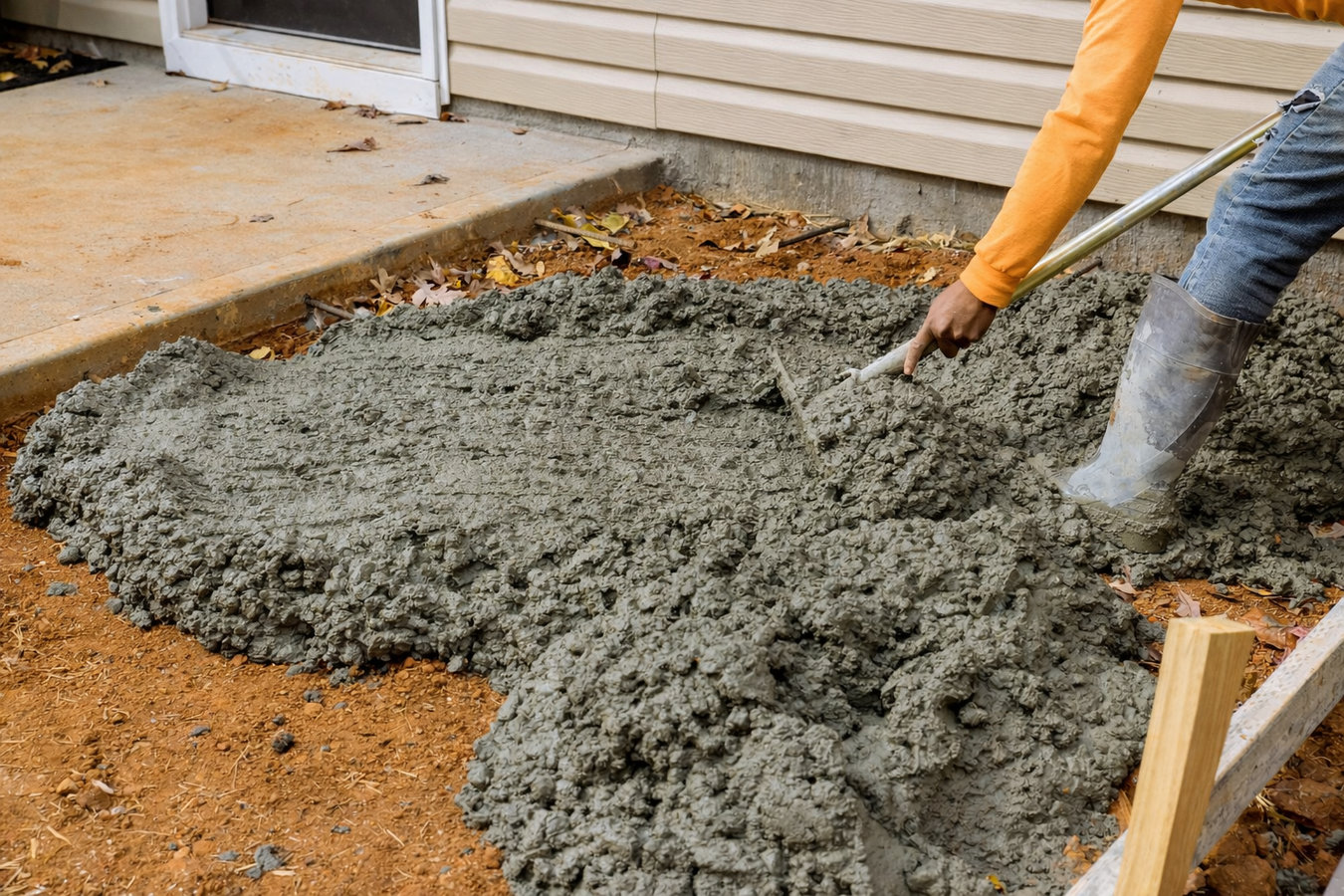
Sunken driveways, sidewalks, and garage floors can be lifted back to level without tearing out the old concrete and starting over.
Foundation raising in Rochester lifts sunken concrete slabs back to their original level by pumping material into the voids beneath them, with most residential jobs completed in a few hours without demolition. Small holes are drilled through the slab, material is pumped underneath until the surface rises, and the holes are patched when the work is done.
Rochester homeowners deal with this problem more than they realize. The freeze-thaw cycles that hit southeastern Minnesota every year wash soil out from under slabs season by season - and once those voids form, gravity does the rest. If you have a driveway section that rocks when you step on it or a sidewalk joint that has dropped an inch on one side, that is a sinking slab, not just aging concrete. It is worth addressing before it breaks into pieces that require a full slab foundation replacement rather than a simple lift.
If a section of your driveway, sidewalk, or garage floor shifts under your weight, the soil beneath it has lost support. This is one of the clearest signs that lifting is needed. In Rochester, it often becomes obvious in April or May after the ground has fully thawed.
When you can see daylight or a gap under the edge of a concrete slab, voids have formed underneath. Water will continue to flow into those gaps with every rain or snowmelt event, making the problem worse each season.
Two sections of a driveway or walkway that used to be flush but now have one side raised higher than the other are a classic sign of differential settling. Beyond being unsightly, an uneven joint is a trip hazard - especially near entryways and garage approaches.
If water collects on your driveway or patio after rain or snowmelt rather than draining away, the slope of the slab may have shifted. Standing water accelerates erosion underneath, and in Rochester winters it becomes a freeze-thaw hazard on the surface as well.
We offer two main methods for lifting concrete in Rochester. Traditional mudjacking pumps a cement-soil-water slurry beneath the slab to fill voids and push the concrete back up. Polyurethane foam lifting uses an expanding foam that is lighter, cures faster, and requires smaller holes - making it the better choice when the soil beneath is soft or when you need the surface back in use quickly. After the inspection, we will explain which method makes sense for your slab and why.
Our foundation raising work covers driveways, sidewalks, sections cut for removal and repair, garage floors, and pool deck areas. When a slab has sunk too far to lift - cracked into many pieces, crumbling along the edges, or broken through repeated freeze-thaw damage - we will tell you that honestly and talk through whether a new pour under our slab foundation building service makes more sense for your situation.
Best suited for larger voids, heavier slabs, and homeowners looking for the most cost-effective lifting method.
Best suited for situations where speed of return to use matters, soil beneath is loose, or smaller holes are preferred.
Best suited for homeowners with sunken driveway panels or a settled apron where the driveway meets the garage floor.
Best suited for entry walks, front steps, and sidewalk sections with uneven joints that have become a trip hazard.
Rochester sits in a river valley in southeastern Minnesota where the freeze-thaw cycle is the single biggest driver of concrete problems. Water seeps under slabs in fall, freezes and expands all winter, then thaws in spring leaving voids behind. The clay-heavy glacial soils common throughout the Rochester area hold moisture and shift as they freeze and thaw, which means the process is especially pronounced here compared to areas with sandier or better-draining soil. Over several seasons, what started as minor settling becomes a rocking slab or a clear gap under the edge. Homeowners in Stewartville and Byron face the same conditions and often call us in spring after seeing what the winter left behind.
The spring snowmelt adds another layer to the problem. Rochester receives substantial snowfall each winter, and when that snow melts quickly in late March or April, large volumes of water move across driveways and through yards in a short window. If gutters and grading are directing that water toward a slab rather than away from it, the erosion under the concrete accelerates. Addressing the drainage at the same time as the lift is the single most effective thing you can do to make the repair last through multiple Rochester winters. We look at drainage as part of every foundation raising estimate and will point out what we see.
Tell us where the slab is, what it is doing, and how long you have noticed the problem. We respond within one business day and schedule a site visit - we do not quote slab lifting over the phone, because voids and slab condition have to be seen in person.
We walk the slab, check for cracks and structural integrity, probe for voids, and assess drainage. You get a written estimate that explains the scope, the method we recommend, and the price - no surprises on the day of the job.
The crew drills small holes in the sunken area, pumps material beneath the slab until it rises to the correct level, and patches the holes with concrete. Most residential jobs are done in a few hours with no heavy equipment tearing up your yard.
Before we leave, we walk the finished slab with you and confirm it is solid and level. We will also share what we saw with drainage and give you practical advice on protecting the repair through Rochester winters.
We come out, inspect the slab in person, and give you a written estimate at no charge. No commitment required.
(507) 738-1155We never quote slab lifting over the phone. The void size, slab thickness, and structural condition all affect the method and the price, and the only way to know those things is to look. You get an accurate written estimate - not a number that changes when we show up.
If your slab is too far gone to lift reliably, we will tell you that clearly rather than taking your money for a repair that will not hold. Rochester winters are hard on concrete, and some slabs genuinely need replacement - we give you the straight answer so you can make the right call.
We have worked through Rochester's climate for years and understand how deep frost, clay soils, and spring snowmelt affect concrete work here. That knowledge shapes how we prep, time, and finish every job - Minnesota licensed contractors working in conditions they know well.
A lifted slab that still drains water toward it will settle again. We look at grading and downspout direction as part of every estimate and tell you what we find - because addressing the root cause is the only way to make the repair last.
Every foundation raising job we take on in Rochester starts with an honest inspection and ends with a level surface you can use the same day. We back our work with a written estimate and straight talk about what will hold and what will not.
Precise saw cuts to remove damaged sections before lifting or replacement.
Learn MoreFull new slab installation when the existing concrete is beyond repair.
Learn MoreSpring books up fast once the ground thaws - call now to get on the schedule and protect your slab before another winter makes the problem worse.